 conusweb
 conusweb
What custom software costs compared with off-the-shelf SaaS
Cost compared over three to five years: when a subscription wins, when building your own wins, and the hidden costs on both paths.
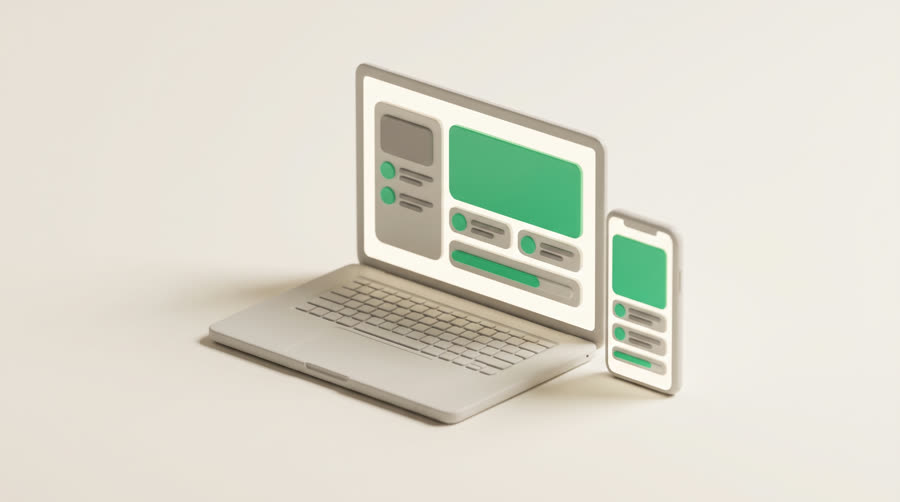
An off-the-shelf SaaS product typically costs €20 to €300 a month per user or per company depending on the feature set. Custom software requires an up-front investment of €10,000 to €80,000 plus lower ongoing costs for hosting and maintenance. The deciding question is not which is cheaper at the start, because SaaS always wins that one. It is which is cheaper over three to five years, and whether the off-the-shelf product covers your processes at all.
Cost compared over time
| Off-the-shelf SaaS | Custom software | |
|---|---|---|
| Up-front investment | Low, a monthly subscription | High, a one-off build |
| Cost after 1 year (smaller company) | €500 – €5,000 | €10,000 – €40,000+ |
| Cost after 3 years (growing company) | Rises with users and volume | Low ongoing hosting and maintenance |
| Ownership | The company owns nothing, only access | The company owns the code and the data |
| Fit to your processes | Limited to what the platform allows | Built around how you actually work |
| Risk of terms changing | High, the vendor can change pricing | None, you own the solution |
Why SaaS looks cheaper and may not be
SaaS platforms price per user or per volume, which means cost rises in direct proportion to the company's growth. A company of five pays a fraction of what a company of a hundred pays for the same tool. For fast-growing B2B companies, SaaS costs over three to five years can therefore climb past the one-off investment in a custom build, with the difference that at the end of it the company owns nothing.
When off-the-shelf SaaS is the right call
- A standardised process – accounting, email marketing, project management and similar processes that work much the same in every company.
- A fast start – you need a solution now, not in several weeks.
- Uncertain future need – you do not yet know whether the company will need this process in this shape long term.
- Low volume or a small team – costs stay low at a smaller scale of use.
When custom software is the right call
- A specific process no off-the-shelf product covers properly – the company bends itself around the software instead of the software serving the process.
- Growing volume of users or data – at larger scale, the one-off investment beats rising monthly fees.
- A need for full control over the data – particularly with sensitive data, where a third-party platform is a security or compliance risk.
- Several systems joined into one workflow – when a company runs five or six separate tools and actually needs one connected system rather than moving data between them by hand.
- Technology as a competitive advantage – if the software is part of what the company offers its clients, an off-the-shelf product cannot differentiate it.
The hidden costs people forget
With SaaS:
- Overage charges for records, API calls or seats.
- Fees for extra integrations or premium features.
- Data migration costs if the company later decides to move elsewhere.
With custom software:
- Ongoing maintenance and updates, typically 15 to 20 per cent of the original investment a year.
- Infrastructure scaling as volume grows.
- The need for a clear agreement on long-term support after go-live. What to ask for is covered in how to choose a supplier.
The hybrid approach is what usually happens
Most B2B companies do not in fact use one approach. Standardised processes run on off-the-shelf tools, while the processes that differentiate the company, or are too specific for a packaged product, are built. A typical example is a custom AI agent sitting on top of an existing SaaS CRM. That combination tends to give the best ratio of cost to value.
Frequently asked questions
- Is custom software worth it for a small company?
- Usually not at the start. A small company with a limited budget and processes that are still settling benefits more from the flexibility and low entry cost of off-the-shelf tools. Custom development pays off once the company hits a specific recurring problem that no packaged product solves well.
- Can we move from SaaS to a custom solution later?
- Yes, and it is a common path. A company starts with a packaged tool, and when its processes outgrow what the tool allows or the cost of scaling becomes disproportionate, it moves to something built for its needs.
- Is custom software always more expensive than SaaS?
- At the start yes, over the long run not always. With growing volume of users or data, cumulative subscription costs can match or exceed the one-off investment within a few years.
- How do I tell which suits my process?
- Two questions decide it: is there an off-the-shelf product that covers your process without major compromises, and do you expect significant growth in volume over the next few years? If the answer to both is no, custom development is worth looking at seriously.
Related articles
What a custom AI agent costs to build for a B2B company
What actually drives the price of an AI agent: scope of autonomy, integrations, RAG infrastructure, compliance, and the running costs suppliers rarely mention up front.
Read the article
How to choose a custom software supplier in SK/CZ, and what to ask
Five areas to go through before signing: architecture, code ownership, GDPR, verifiable references and post-launch support. Plus the warning signs.
Read the article
What an AI agent is and how it differs from a chatbot
A chatbot answers the question; an agent completes the task. The architectural difference, three levels of autonomy, and when each is enough.
Read the article